SimulAlert®

How SimulAlert® Compares

A practical perspective for school leaders

Solutions Comparison Table

Feature / Factor
SimulAlert
SimulAlert® (Color-Coded System)
Single Button Badge
Single Button Badge (e.g., Centegix, Raptor)
App-Based Platforms
App-Based Platforms (e.g., CrisisGo, Navigate360, Raptor)
Alert Clarity
Instantly communicates the specific emergency through color recognition — no guesswork
Requires interpretation; emergency type not immediately clear
Multiple alert types may require menu navigation
Accuracy & Intent
Intentional activation reduces false alerts and confusion
Accidental presses are common
Depends on correct app navigation
Infrastructure Dependence
Operates independently — no Wi-Fi dependency during crisis
Minimal network reliance
Requires active network connection
Speed of Access
Always visible and wearable — no device unlocking required
Worn on person
Requires locating phone and opening app
First Responder Alignment
Built-in visual guidance hubs support coordinated response
No integrated responder guidance
Administrative Visibility
Real-time contextual dashboard enhances situational control
Typically limited to location-based alerts
Limited or communication-focused dashboards
Ease of Adoption
Simple visual system — intuitive for staff and students
Simple activation
Training required for proper app use
Ideal For
Comprehensive emergency signaling + coordinated response + administrative oversight
Basic alert activation
Communication layering and protocol management

App-Based Safety Platforms

Many widely used school safety platforms rely primarily on mobile applications for alert initiation and coordination. These solutions are often quick to deploy and may appear cost-effective at first glance.

However, app-based systems depend on staff:

Having personal phones immediately accessible

Unlocking devices under stress

Navigating menus during time-sensitive situations

In real emergencies, cognitive load and hesitation can delay action. App-based platforms also typically lack on-site visual guidance for responders, meaning first responders must rely on secondary communication rather than immediate environmental cues.

SimulAlert® was designed to reduce these dependencies by allowing alerts to be initiated without personal mobile devices, while providing visual guidance inside the building through fixed alert hubs.

safety-platform

Single-Button Badge Systems

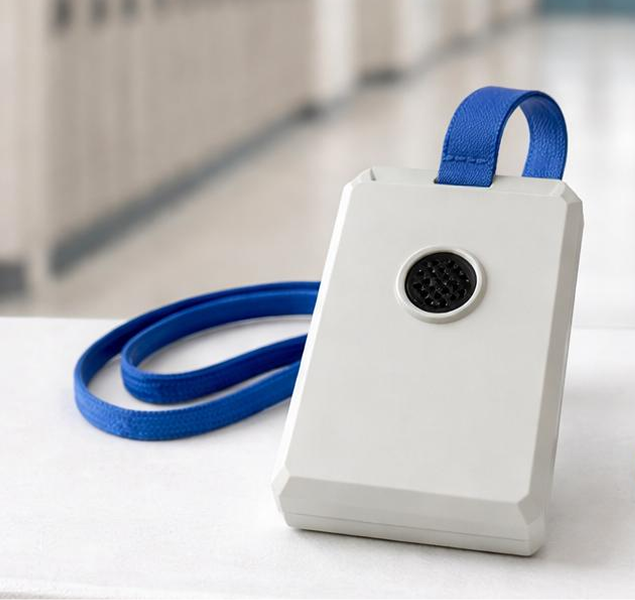
Single-button wearable badge systems offer fast activation and are increasingly common in schools. Their simplicity can be effective, but it also introduces trade-offs. Because a single button does not distinguish between alert types, these systems may:

Increase the likelihood of accidental or false alerts

Require secondary clarification after activation

Provide limited contextual information at the moment an alert is triggered

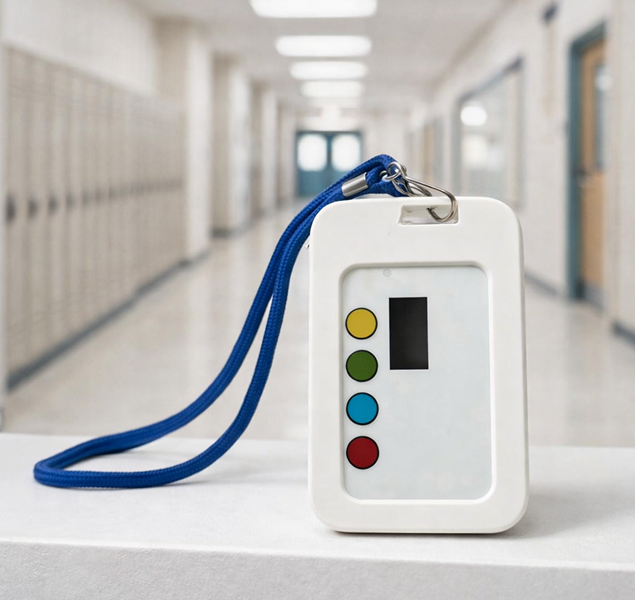
SimulAlert® takes a different approach by using color-coded staff badges. Each color corresponds to a specific type of incident, allowing staff to communicate the nature of an emergency immediately. This reduces ambiguity, supports faster decision-making, and minimizes unnecessary escalations.

In addition, SimulAlert® enables staff to indicate “safe/OK” status, supporting accountability and faster reunification — a capability not typically available in single-button systems.

Visibility and Response Coordination

Many emergency alert platforms focus on sending notifications outward. SimulAlert® was designed with equal emphasis on leadership visibility and responder guidance.

SimulAlert® provides:

A real-time dashboard showing alert status, locations, and zones

Visual hubs inside buildings that guide first responders on site

Integrated awareness that supports faster coordination and neutralization

This combination allows school leadership and responders to share a common operating picture, rather than relying on fragmented updates.

Compliance, Accountability, and Risk Considerations

Emergency preparedness increasingly requires documentation, accountability, and clarity, not just notification capability.

SimulAlert® automatically records:

Alert initiation

Response actions

Timeline data supporting compliance and post-incident review

The system was built with compliance and operational transparency in mind, without increasing administrative burden on staff.

A Complement — Not a Replacement — to Physical Security Measures

Physical security investments such as reinforced doors, window film, metal detectors, and gunshot detection systems play important roles in campus safety. These solutions address threat mitigation, but not incident coordination.

SimulAlert® complements these investments by providing:

Immediate human-initiated alerts

Coordinated response workflows

Real-time situational awareness

For many schools, SimulAlert® becomes the connective layer that ties physical security measures into an actionable response system.

Summary for Decision-Makers

Faster, clearer emergency activation

Reduced reliance on personal devices

Visual guidance for responders

Leadership visibility during incidents

Built-in accountability and compliance support

Disclaimer: Competitor references are based on publicly available information and general market observations. Product capabilities may vary by deployment. SimulAlert® makes no claims regarding the performance, reliability, or legal standing of other vendors.