
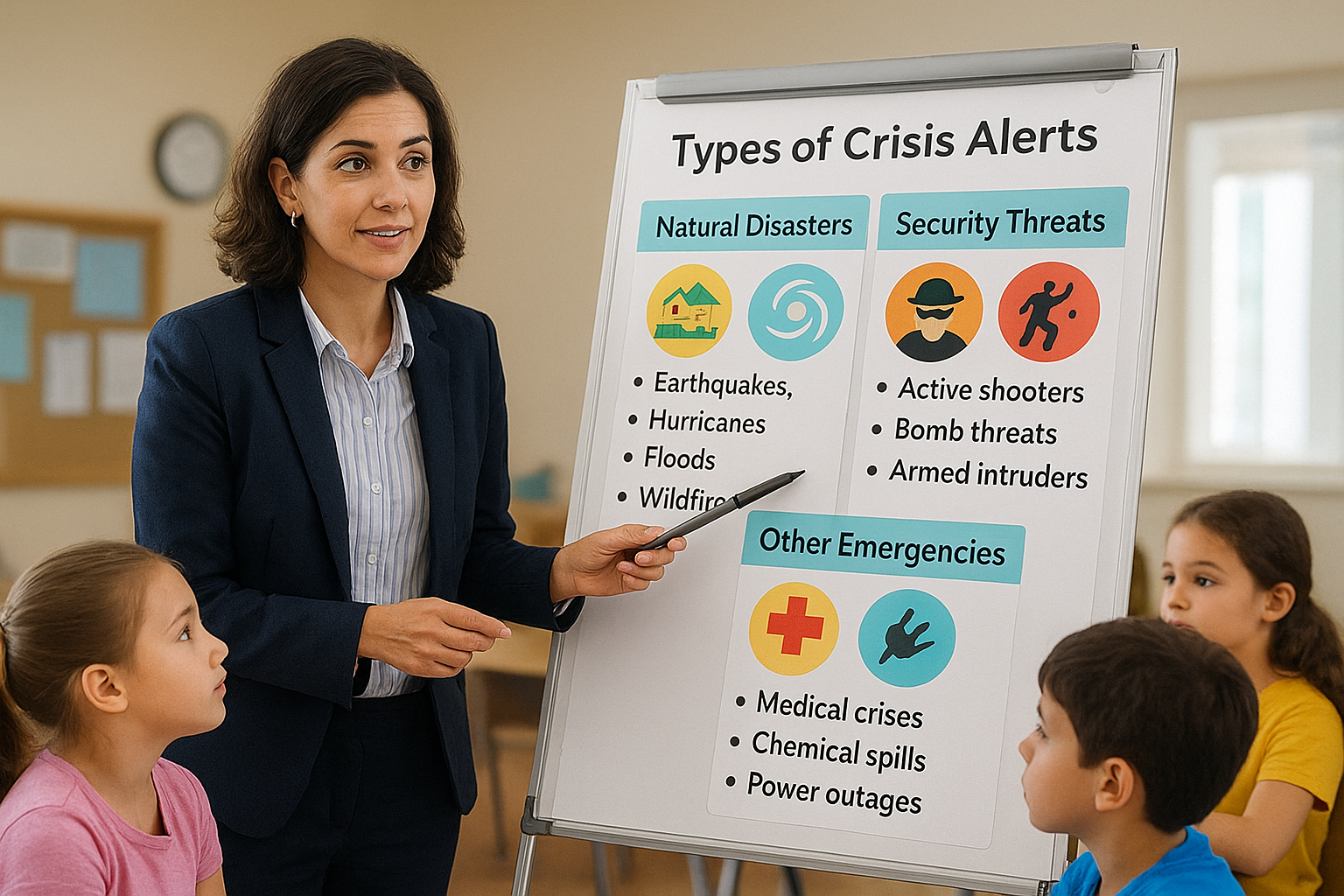
In today’s unpredictable world, school safety is paramount. Crisis alerts—whether triggered by natural disasters or human threats—demand swift, coordinated responses. Schools must not only recognize these alerts but also prepare with clear strategies, communication protocols, and a culture of safety. This article outlines essential practices for navigating crisis alerts, ensuring that schools can respond effectively and foster resilience. Explore more at the U.S. Department of Education’s school safety resources.
Understanding Crisis Alerts in Educational Settings
Crisis alerts are notifications signaling emergencies that require immediate action to protect students, staff, and visitors. Schools face unique challenges: large populations of children, diverse staff roles, and complex environments. Alerts must quickly convey the nature of the threat and required actions. Effective systems combine advanced technology with clear protocols, ensuring everyone knows how to respond. Learn more from the National Center for School Safety on building effective alert systems.
The Importance of Crisis Preparedness in Schools
Preparedness is more than a written plan—it’s a culture of safety that permeates every aspect of the school environment. Regular training and drills reduce confusion, helping students and staff remain calm during emergencies. Preparedness also extends to recovery: supporting emotional needs and restoring educational continuity. A holistic approach ensures schools can withstand crises and bounce back quickly. See Ready.gov’s guide to school emergency planning.
Types of Crisis Alerts: Natural Disasters and Security Threats
Schools must prepare for diverse emergencies:
- Natural disasters: earthquakes, hurricanes, floods, wildfires. Some environments may be prone to some of these due to geographic location. Schools must prepare for the known and unknown based on their unique situations.
- Security threats: active shooters, bomb threats, armed intruders.
- Other emergencies: medical crises, chemical spills, power outages.
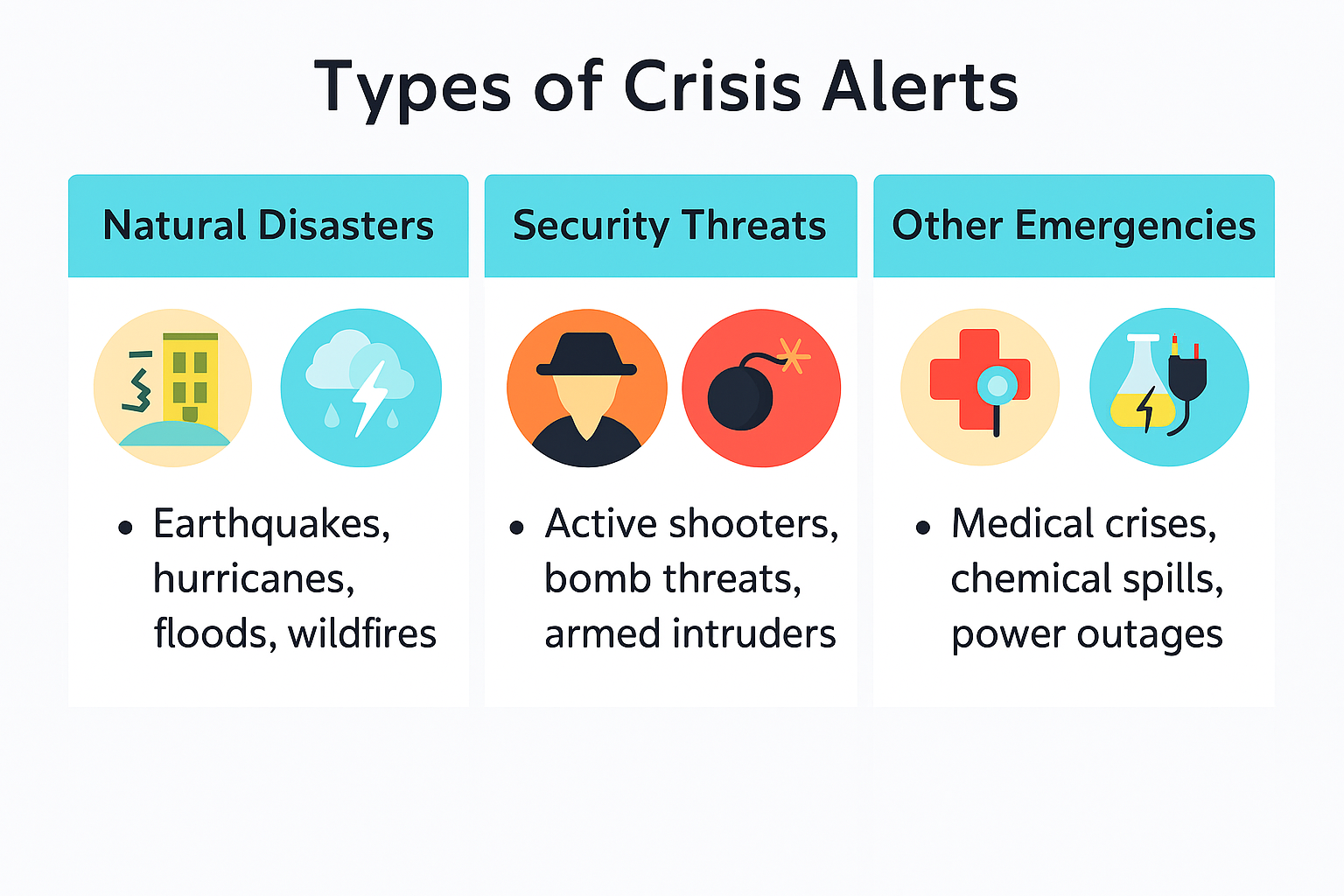
By categorizing threats, schools can design comprehensive, scenario‑specific responses. Review FEMA’s emergency management strategies for schools for more details.
Developing a Comprehensive Crisis Response Plan
A strong crisis response plan is the foundation of safety. Key steps include risk assessment, communication protocols, crisis management teams, and regular drills. Collaboration among administrators, staff, students, parents, and local emergency services ensures plans are realistic and effective. Explore CDC’s school emergency preparedness framework.
Training Staff and Students: Drills and Education
Training builds confidence and reduces panic. Schools should conduct drills, debrief after exercises, involve local emergency services, and educate students on recognizing threats and basic first aid. Specialized staff training in communication and medical care strengthens preparedness. Access American Red Cross school safety training programs to enrich your training plans and preparedness.
Communication Strategies During a Crisis
Clear communication saves lives. Centralized systems, designated communicators, transparency, and feedback channels are essential. Keeping parents and staff informed reduces misinformation and anxiety. Read the National Association of School Psychologists’ crisis communication guidance. It is critical to plan on the messaging and timing for the different stakeholders.
Technology and Tools for Effective Crisis Management
Technology enhances preparedness: emergency notification systems, video surveillance, access control, and incident management software streamline detection and response. Investing in these tools ensures faster recovery. Learn how school safety technology is evolving through the National Institute of Justice. Wearable panic buttons have become crucial elements of school safety technology. Panic buttons serve as a critical component of a comprehensive safety strategy, addressing the unique challenges faced by educational institutions. Schools are dynamic environments where the well-being of many individuals must be safeguarded, making the quick and effective response to emergencies paramount. Wearable panic buttons eliminate the ambiguity and confusion that can arise during emergencies. In high-stress situations, individuals may struggle to remember emergency procedures or communicate effectively. Panic buttons provide a straightforward solution, ensuring that help is on the way without the need for detailed instructions or explanations. This clarity can be a lifesaver during chaotic and frightening events.
Collaborating with Local Authorities and Emergency Services
Partnerships with law enforcement, fire departments, and medical services strengthen crisis management. Benefits include access to expertise, improved communication, and alignment with local protocols. Review Homeland Security’s school safety partnership resources. A strong relationship with local law enforcement and emergency responders can drastically improve response time and coordination. Inviting them to participate in drills builds familiarity and confidence on both sides
Evaluating and Improving Crisis Response Plans
Preparedness is dynamic. Schools must review plans regularly, analyze drills, implement improvements, and communicate updates. Continuous evaluation keeps strategies effective. See the National Safety Council’s emergency preparedness recommendations.
Conclusion: Building a Culture of Safety in Schools
Building a culture of safety in schools is a continuous and collective effort that requires the involvement and commitment of the entire school community. From administrators to teachers, students to parents, and local authorities to emergency services, everyone has a role to play in ensuring the safety and well-being of students and staff. By fostering a culture of safety, schools can create an environment where preparedness, vigilance, and resilience are prioritized, and where everyone is empowered to act decisively in the face of a crisis.
A key aspect of building a culture of safety is education and awareness. Schools must provide ongoing training and education on safety protocols, emergency procedures, and crisis management. This includes regular drills, workshops, and informational sessions that reinforce the importance of preparedness and equip individuals with the knowledge and skills they need to respond effectively in an emergency. By making safety a central part of the school curriculum and culture, schools can ensure that students and staff are always prepared.
Communication is also a vital component of a safety culture. Schools must establish clear and open channels of communication, ensuring that information about safety protocols, potential threats, and crisis response plans is readily available and easily understood. This includes maintaining transparent communication with parents and the broader community, keeping them informed and involved in safety efforts. By promoting open dialogue and collaboration, schools can build trust and ensure a coordinated response to any crisis.
Finally, creating a culture of safety requires a commitment to continuous improvement. Schools must regularly evaluate their crisis response plans, seek feedback from all stakeholders, and make necessary adjustments to enhance their preparedness. By staying proactive and adaptable, schools can ensure that they are always ready to protect their students and staff, no matter what challenges they may face. Through these collective efforts, schools can build a resilient and safe environment where students can thrive and learn without fear.
Discover Safe and Sound Schools’ resources for building a culture of safety.
To learn more about effective emergency alert and response with the SimulAlert® patented color-coded badge system, click here to request a demo.